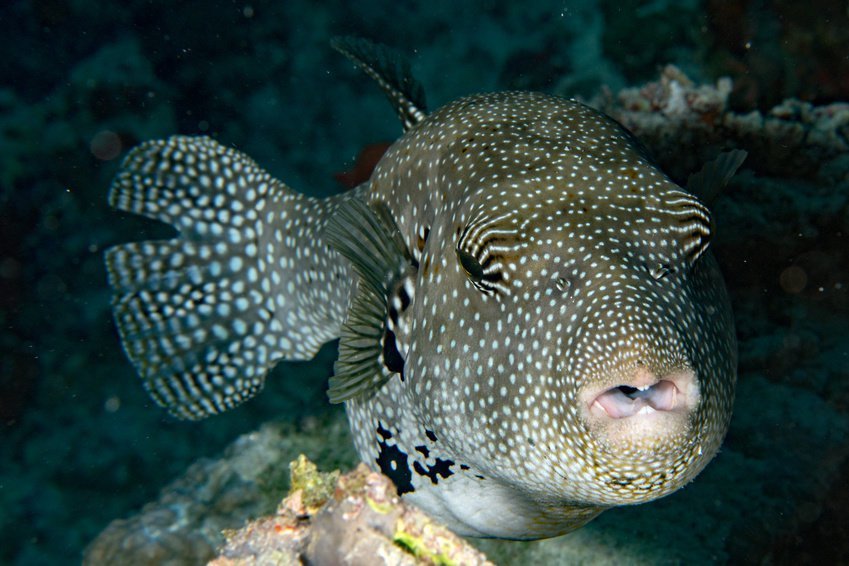
Pufferfish and humans share the same genes for teeth
Human teeth evolved from the same genes that
make the bizarre beaked teeth of the pufferfish, according to new
research by an international team of scientists.The study, led by Dr Gareth Fraser from the University of Sheffield’s
Department of Animal and Plant Sciences, has revealed that the
pufferfish has a remarkably similar tooth-making programme to other
vertebrates, including humans.Published in the journal PNAS, the research has found that
all vertebrates have some form of dental regeneration potential. However
the pufferfish use the same stem cells for tooth regeneration as humans
do but only replace some teeth with elongated bands that form their
characteristic beak.The study’s authors, which include researchers from the Natural
History Museum London and the University of Tokyo, believe the research
can now be used to address questions of tooth loss in humans.“Our study questioned how pufferfish make a beak and now we’ve
discovered the stem cells responsible and the genes that govern this
process of continuous regeneration. These are also involved in general
vertebrate tooth regeneration, including in humans,” Dr Fraser said.
Alexandre P. Thiery, Takanori Shono, Daisuke Kurokawa, Ralf Britz, Zerina Johanson, Gareth J. Fraser. Spatially restricted dental regeneration drives pufferfish beak development. Proceedings of the National Academy of Sciences, 2017; 201702909 DOI: 10.1073/pnas.1702909114
Rory L. Cooper, Kyle J. Martin, Liam J. Rasch, Gareth J. Fraser. Developing an ancient epithelial appendage: FGF signalling regulates early tail denticle formation in sharks. EvoDevo, 2017; 8 (1) DOI: 10.1186/s13227-017-0071-0
Puffer fish.
Credit: © Andrea Izzotti / Fotolia

 wishwhale