
Tag: cetacean
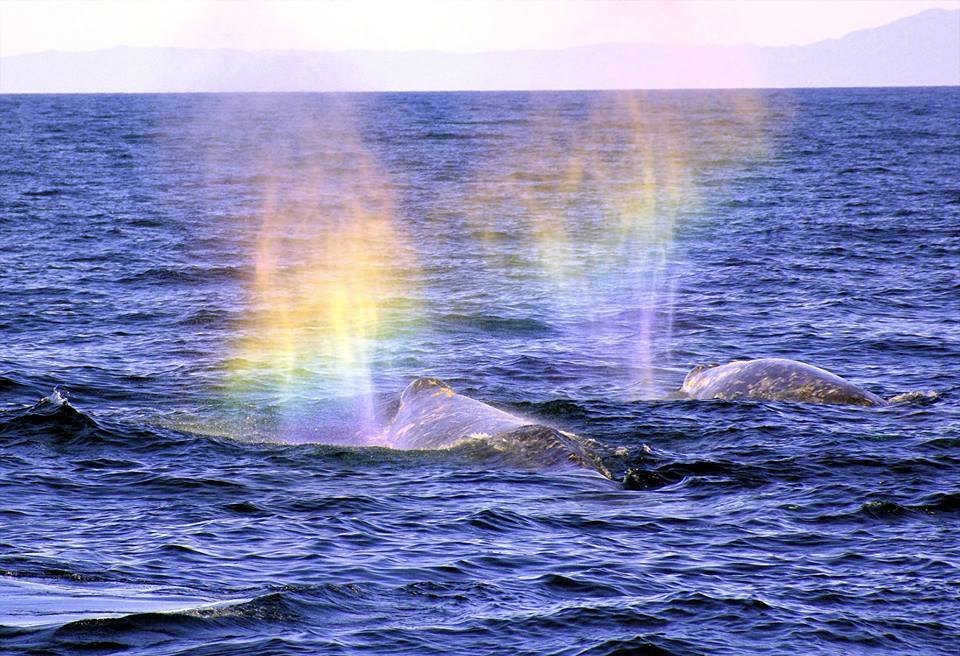
Whoa! Sunlight creates rainbows from the spouts of two gray whales at Channel Islands National Park off the California coast. The waters surrounding Channel Islands are home to more than 27 species of whales, dolphins and porpoises – representing about one-third of cetacean species found worldwide. If you’re hoping to catch a gray whale sighting, try visiting the park during mid-December to mid-March when they migrate. Photo courtesy of Larry Goldman.
Check out this phenomenal photo of gray whales in Channel Islands National Park and Channel Islands National Marine Sanctuary! The park and sanctuary overlap in the waters adjacent to the islands, while the sanctuary extends further out into the ocean to give animals like these gray whales some added protection while they’re passing through.





Visiting Iceland? Don’t Eat the Locals!
A staggering 35 to 40% of the meat from minke whales slaughtered by Icelandic whalers is eaten by tourists visiting the country who often have no idea that their actions are propping up commercial whaling – an industry in decline.
As a result, WDC is launching an awareness campaign targeted at tourists thinking of visiting Iceland to draw attention to the fact that eating the meat, which is often offered as part of the ‘tourist experience’ in the country, plays a significant part in keeping the cruel practice of whaling afloat.
WDC is positively encouraging tourists to this amazing country to get out to see the whales with a responsible, local whale watching operator, but ask that people think about the impact that eating the meat has on the whale watching industry, and also the inhumane way in which these magnificent and intelligent creatures are killed before they are served up.
We are seeing increasing numbers of tourists walking off whale watching vessels and straight into restaurants that serve whale meat. More than 100 restaurants – including ÞrÃr Frakkar, allegedly a favourite of Jamie Oliver, and shops are currently selling minke whale meat. Iceland’s whalers are also putting more effort into promoting the sale of whale meat as an exotic food and are now offering smoked and marinated whale meat in addition to whale steaks for grilling.
WDC asks people who are thinking of going to Iceland to resist the temptation to give the meat a try despite what you may be told by local whale hunters. The fact is that only a small percentage of Icelandic people eat the meat these days. The whales suffer a long and slow death, they are not suitable as a species for human harvesting and, contrary to myth, they are not responsible for reducing local fish stocks.
Check our list of restaurants that should be avoided before visiting Iceland, and also to consult our handy guide to whale meat terms in Icelandic, so that tourists can avoid accidentally ordering the whale they watched only hours before.
GLOSSARY OF PHRASES THAT YOU MIGHT SEE ON A MENU THAT INDICATES A DISH CONTAINS WHALE
- Hvál/Hvalur – whale
- Hvál biff – whale meat
- Hval rengi – whale blubber soured with milk
- Grillaður Hvalur – grilled whale
- Hrefnusteik – minke whale steak
- Hrefnukjöt – minke whale meat
- Grafið hrefnukjöt – raw minke whale meat
- Reykt hrefnukjöt – smoked minke whale meat
- Súr Hvalur – pickled whale
- Hrefnu-Carpaccio – minke whale carpaccio (raw thin slices of whale meat)
- hrefnuvöðvi – minke whale muscle
- Hrefnuforréttur – minke whale appetizers or starters
- Sur rengi – pickled whale blubber



 wishwhale
