Climate change scientists should think more about sex
Urgent need to check how males and females respond differently to ocean acidification
Climate change can have a different impact on male and female fish, shellfish and other marine animals, with widespread implications for the future of marine life and the production of seafood.
But a paper published today in the Royal Society journal Biology Letters has found that very little research into how males and females respond differently to climate change has been carried out. This is despite recent research on ocean acidification published by lead author Dr Robert Ellis showing that male and female shellfish respond differently to stress.
Dr Ellis says the impact on different sexes should be properly assessed in all aquatic animals to accurately predict how populations will respond to climate change. Any effect on spawning, settlement or survival could have a major impact on sustainable supplies of fish and shellfish.
The latest research by the University of Exeter in collaboration with Plymouth Marine Laboratory reveals that less than 4% of climate-change studies have tested the impact of ocean acidification on males and females separately.
Over the past decade, research into the impacts of rising CO2 on fish and shellfish species has increased dramatically, helping scientists accurately predict the threat climate change poses ecosystems worldwide. Worrying changes in behaviour, survival, growth, reproduction and health have been found in many species.
Co-author of the study Professor Rod Wilson, a climate change marine biologist based at the University Exeter, said in light of this research separate environmental management strategies may be required.
Although this potentially new species looks exactly like what we know to be the bonnet head hammer head shark, genetically it is different, with its differences going back millions of years!
This might not mean much to the average person since they are basically identical visually. But to a marine conservationist (hi!) this means that this could divide the population numbers we thought to be present for a single species, and increasing their CITES rating. Bonnet head hammerhead sharks are currently listed as least concern, but by dividing the population we will potentially increase the status of two species to threatened, endangered, or higher. This would support creating more marine conservation areas and greater laws to protect the ocean environment where these species live.
I wish we didn’t need the species to be endangered before protecting the environment on this scale, but I will take it.
A staggering 35 to 40% of the meat from minke whales slaughtered by Icelandic whalers is eaten by tourists visiting the country who often have no idea that their actions are propping up commercial whaling – an industry in decline.
As a result, WDC is launching an awareness campaign targeted at tourists thinking of visiting Iceland to draw attention to the fact that eating the meat, which is often offered as part of the ‘tourist experience’ in the country, plays a significant part in keeping the cruel practice of whaling afloat.
WDC is positively encouraging tourists to this amazing country to get out to see the whales with a responsible, local whale watching operator, but ask that people think about the impact that eating the meat has on the whale watching industry, and also the inhumane way in which these magnificent and intelligent creatures are killed before they are served up.
We are seeing increasing numbers of tourists walking off whale watching vessels and straight into restaurants that serve whale meat. More than 100 restaurants – including ÞrÃr Frakkar, allegedly a favourite of Jamie Oliver, and shops are currently selling minke whale meat. Iceland’s whalers are also putting more effort into promoting the sale of whale meat as an exotic food and are now offering smoked and marinated whale meat in addition to whale steaks for grilling.
WDC asks people who are thinking of going to Iceland to resist the temptation to give the meat a try despite what you may be told by local whale hunters. The fact is that only a small percentage of Icelandic people eat the meat these days. The whales suffer a long and slow death, they are not suitable as a species for human harvesting and, contrary to myth, they are not responsible for reducing local fish stocks.
Check our list of restaurants that should be avoided before visiting Iceland, and also to consult our handy guide to whale meat terms in Icelandic, so that tourists can avoid accidentally ordering the whale they watched only hours before.
GLOSSARY OF PHRASES THAT YOU MIGHT SEE ON A MENU THAT INDICATES A DISH CONTAINS WHALE
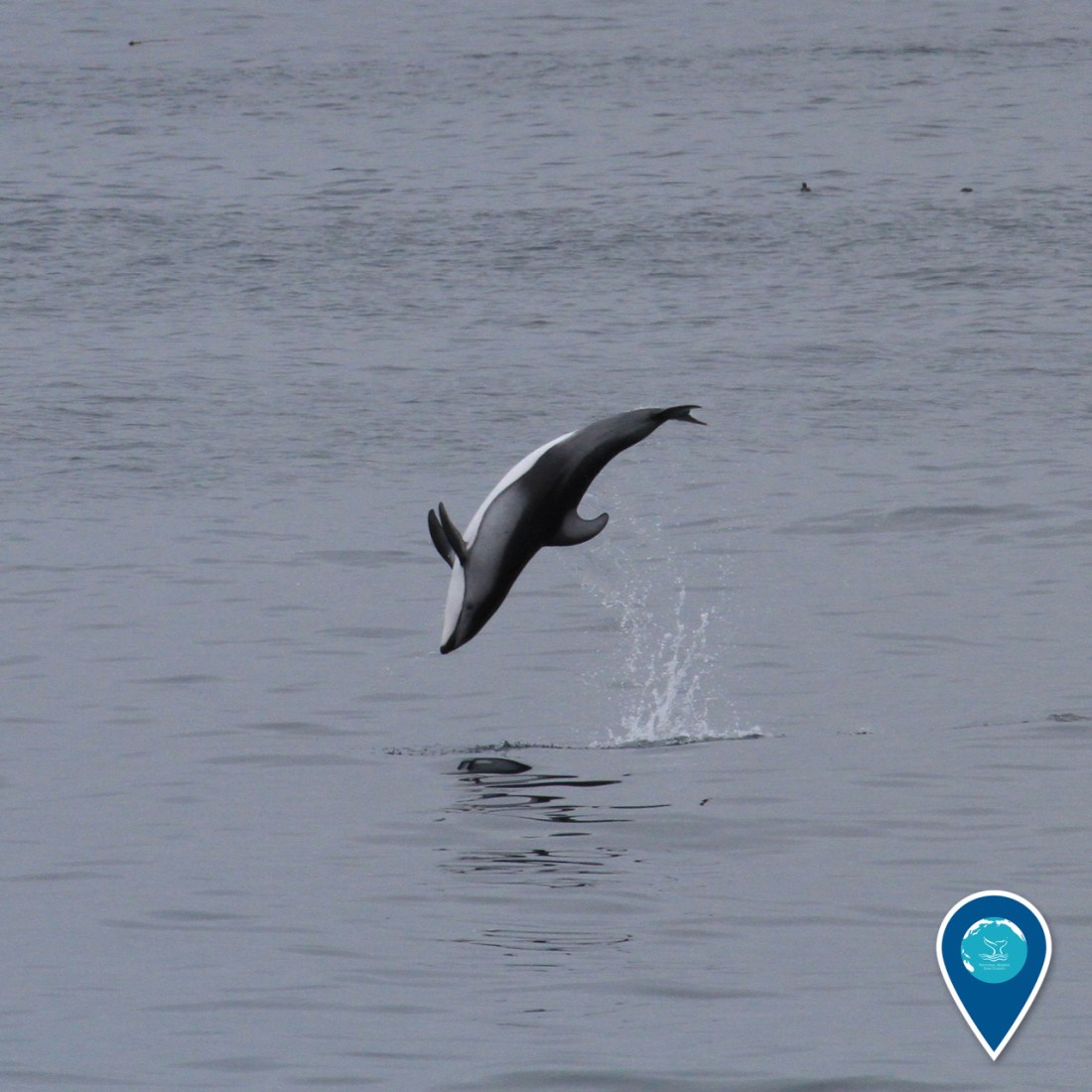
Cordell Bank National Marine Sanctuary is home to some 13 species of cetaceans (dolphins, whales and porpoises)! Pacific white-sided dolphins like this one are among the most frequently seen at the sanctuary, and are incredibly social animals.
While these dolphins may sidle right up alongside a boat to investigate, never try to touch, chase, or feed them. Pacific white-sided dolphins are among the many species protected under the Marine Mammal Protection Act, and need our help to stay safe and healthy in their natural environment.
When people hear ocean pollution, they immediately think of the visible ones like plastic pollution, oil spills or sewage run-offs. But sound pollution, this invisible threat, is just as devastating to numerous marine animals, especially whales. Remember ‘The Silent World’ from Jacques Cousteau? Well, our oceans aren’t so silent anymore.
Historically, noise levels in the oceans were low enough that whales were able to use their sonar to communicate with each other or to hunt for food. Increased ship traffic, acoustical seismic testing for oil exploration, the use of military sonar, and even small boats in high concentrations have all contributed to the growing sound pollution in the oceans.
Sound travels farther and about five times faster in water than in air. All these high intensity sounds also travel at a higher energy level so they are louder than they would be above the surface. This increased cacophony has made the use of sonar, echolocation and underwater communication between whales extremely difficult. Imagine basically walking around on the airport runway with airplanes landing and taking off every minute or so trying to have a conversation with a friend….except that it’s even louder, and it never stops.
Susan Parks, a biology professor at Syracuse University, compared right whale calls recorded off Martha’s Vineyard in 1956 and off Argentina in the 1977, with those in the North Atlantic in 2000. Parks and her team were astonished with the results. They discovered that North Atlantic right whales actually shifted their calls up an entire octave over the past half century in an attempt to be heard over the unending and increasing low-frequency sounds of commercial shipping. Furthermore, right whale songs used to carry off 20 to 100 miles, but now those calls travel only five miles or so.
Another interesting tidbit of Park’s research came after 9/11. With the commotions and confusion following the attacks, ship traffic drastically dropped for a while. Her team continued recording whale calls during that time, and they could not believe what they heard. Actually, they didn’t hear much. The acoustic fog that had settled on the oceans for decades had suddenly lifted. Furthermore, they analyzed stress hormones found in collected whale poop, and they found that they had considerably dropped. It was obvious that during that brief period of time, whales had finally relaxed.
If whales can’t hear each other as well, they need to spend more time and energy moving around and travelling to ‘quieter’ places in the oceans in order to feed or mate. This seems small, but a prolonged exposure to excessive noise can lead to permanent behavioral changes and thus a long-term impact on population numbers and mortality rates. Additionally, loud sounds have direct impacts on whale hearing, stress levels as we have seen above, and in some extreme cases may cause internal bleeding and death.
A study published in 2014 in the journal PLOS One found that manmade noise pollution can literally make whales go insane. Moreover, scientists have also found that beaked whales are extremely sensitive to sound pollution. They tend to dive too deep when they hear loud noises, then resurface too quickly and can die from the bends. Other studies have blamed military sonar and mapping sonar by oil companies for mass strandings of marine mammals.
What can we do about it? Governments are slowly starting to become conscious of the problem, and some are trying to slow ships down or to re-direct traffic to areas not ecologically significant to marine mammals, but of course this comes with a lot of opposition from the companies, as even a detour of five miles off course can increase costs and time. Many NGOs like Oceana and Greenpeace are also campaigning against the use of seismic blasts for exploration drilling. Technologies are also being developed to drastically reduce the noise from ships and geological surveying. We still need to continue raising awareness on the problem so further political action can occur and some international standards can be set.
You can check out this interesting interview with Christopher Clark, a prominent bioacoustics researcher. Clark goes into more details about seismic blasts and the precise impacts noise pollution may have on whale populations. It’s a great read.
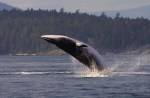
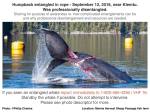
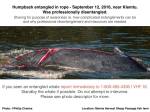
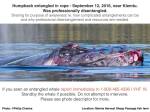
Humpback entangled in rope today [9/12/16] near Klemtu (Marine Harvest Sheep Passage fish farm). Was professionally disentangled. Locals will strive to relocate and monitor the whale. It is essential that coastal British Columbians know what to do if an entanglement is witnessed since, with increasing numbers of Humpbacks on BC’s coast, the risk of whale entanglement has become greater. Our preliminary results from research conducted with MERS / DFO suggest that over 47% of Humpbacks in BC have been entangled (>1,000 Humpbacks). This data provides an indication of how serious the risk of entanglement is but does not reveal how many humpbacks die after becoming entangled.
WHAT TO DO IF YOU FIND AN ENTANGLED WHALE.
– With great urgency, report the entanglement with location to the DFO Incident Line / VHF 16. 1-800-465-4336. – If at all possible, remain with the whale at a distance until trained help arrives or another boat takes over tracking, otherwise the chances of relocating the whale are greatly diminished. – Take whatever video/photos are possible but maintain a distance that doesn’t stress the whale. – Do NOT attempt to remove any fishing gear or rope from the whale as it risks human and whale safety (has led to human death). Professional training and equipment are needed to assess the entanglement and proceed safely with the greatest chance of success. Often, much of the fishing gear in which the whale is entangled is not visible at the surface. If well-intentioned members of the public remove the gear at the surface, it is made much more difficult to: (1) recognize that the whale is entangled; and (2) disentangle the whale even if it is relocated. Trailing gear at the surface provides the opportunity for trained responders to attach a tag to track the whale and/or to attach floatation to maintain contact with and slow down an entangled whale. Loss of this gear can significantly reduce rescuers’ ability to save the whale.
This humpback was lucky that there were people around to help disentangle it. It would have died from starvation had the ropes remained around its mouth like that. But of course, it is also our fault these whales become entangled in the first place. Our fishing line and ropes and nets are are death traps for these animals.
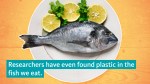
For
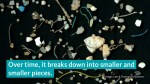
a while now, scientists have known that fish are ingesting small pieces of
plastic. But it wasn’t clear how much of that was reaching our dinner plate.
Ecologist Chelsea Rochman wanted to find out.
“We
found plastic and fibers from textiles (e.g., clothing, carpet, fishing nets)
in about 1 out of every 4 seafood items sampled,” she
told the@huffingtonpost
The study,
which Rochman conducted while at UC Davis, was one of the first to directly
link plastic in the oceans to the fish on our dinner plates.
So
how concerned should we be?
“We
know much more about how plastic debris is harmful to fish and much less about
how plastic debris in our fish is harmful to our health,” Rochman explains.
Lab studies have demonstrated that plastic can get stuck in the guts of fish and
make them feel full. This changes their feeding behavior. Previous research from Rochman
demonstrates that small plastic debris can transfer harmful chemicals to fish.
This causes stress on the liver and changes the activity of genes related to
reproduction.
“Studies
have shown plastic debris in shellfish, fish and even sea salt. So, yes, we need more research
to answer questions about how plastic debris may impact food security (i.e.
fish stocks) and food safety.”
This
is what Rochman plans to study next.
“Seafood
is very healthy. It has essential fatty acids. I would never want to scare
anybody away from eating seafood,” She said. “We need to see if we need a toxic
threshold for plastic in fish.”
What
can the rest of us do?
The
recent ban on microbeads was a major victory. But
microbeads in products like toothpaste and face wash are just one part of the
problem. Single-use plastic items — bottles, bags, plates, straws and utensils
— are also big contributors to the microplastic problem. The less we use, the
better.
 https://embedr.flickr.com/assets/client-code.js










 wishwhale
