For the ochre sea star (Pisaster ochraceus), eating is truly an out-of-body experience. When feeding on mussels or snails, the ochre sea star will turn its stomach out through its mouth and into the shells of its prey along with digestive juices that liquefy its meal, then consume it. Ochre sea stars can squeeze their stomachs through shell openings or slits as narrow as 0.1 mm, letting them get to the “meat of the situation.” Photo: D. Gordon E. Robertson
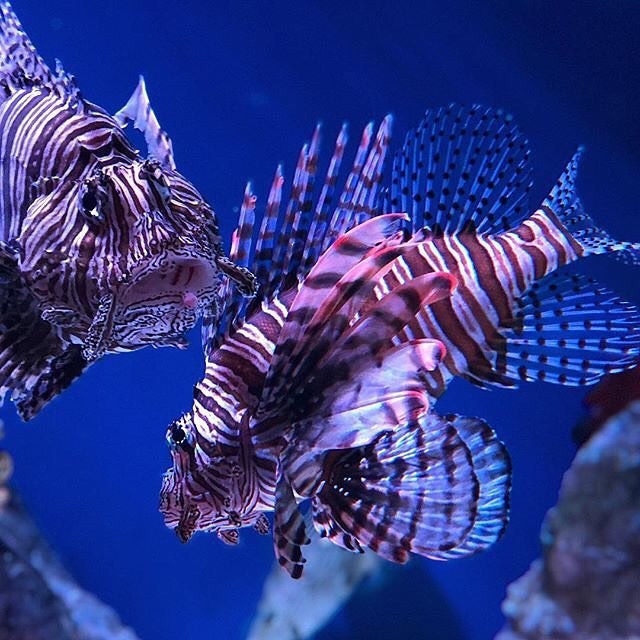
Lionfish may be stunningly beautiful, but they are an invasive menace in the Caribbean. #VisitorPicture by 📷: @floatydreams_ #marchcomesinlikealion #invasivespecies #fish #lionfish #newenglandaquarium
Hello everyone gather round, I’d like to introduce you to another favorite fish of mine. Meet Tetraodon miurus, the potato puffer!
The potato puffer, also called the congo puffer, is a freshwater puffer fish named for, well, looking like a potato with fins. Not to mention that the potato puffer is an ambush predator, unlike most other puffers, which are typically open water hunters. This means that our potato boy here is exceptionally lazy, spending much of it’s time with its awkward, clunk body buried in the substrate with only their eyes and mouth poking out.
They also have extraordinarily smooshy faces that conceal some gnarly fused teeth, resembling a beak! If you wanna see one of these fellas in action, I highly recommend checking out one of my favorite instagram accounts, @jackthepotatopuffer! It has some excellent content and lots of videos of Jack in action, including inhaling eating, and burrowing! Thanks for coming to my TED talk I hope you appreciate the potato boy as much as I do
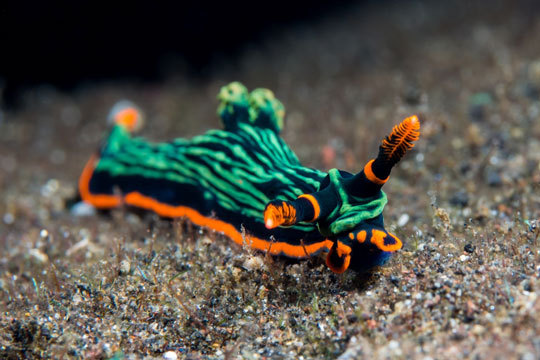
One of my favourite nudibranchs, the dusky nembrotha (also known as variable neon sea slug or, scientifically, Nembrotha Kubaryana) has bright turquoise stripes and a vibrant orange margin. It reaches 12cm long and lives in the tropical West Indo-Pacific. It eats solely ascidians and stores its prey’s toxins to make its own toxic mucus!
So many seadragons! Leafy and weedy seadragons are masters of camouflage. Good thing, too, because they’re pretty slow swimmers. Can you count how many seadragons are in this picture?
The Knifetooth Sawfish (Anoxypristis cuspidata) is a species of sawfish native to the Indo-Pacific ocean. Its bony snout, which contains 18-25 teeth, is used to incapacitate fish and to stir up sediment to uncover prey.






 wishwhale