giffingsharks:

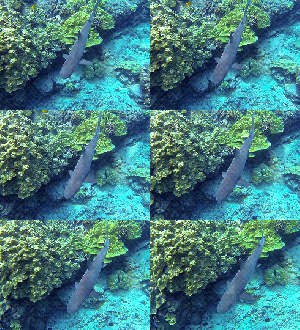
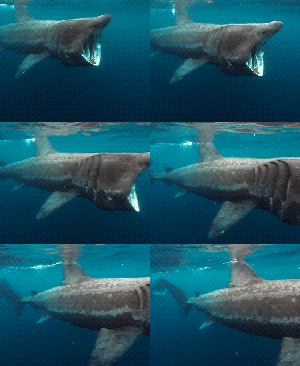
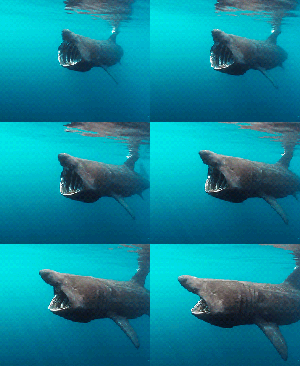
The Basking shark is the second largest shark in the world! This shark lives in cool, temperate waters where there’s a lot of plankton. It swims through the water with its big ol’ mouth wide open; water goes in through the mouth and back out through the gills, but the plankton are strained out by cone-like filters on the gills called “Gill Rakers.” Even though the Basking shark has a massive mouth, it only has a throat about as wide as a grapefruit. So these sharks cause no harm to humans, in fact, they only have teeny tiny teeth! They don’t really care for anything larger than plankton.

giffingsharks:

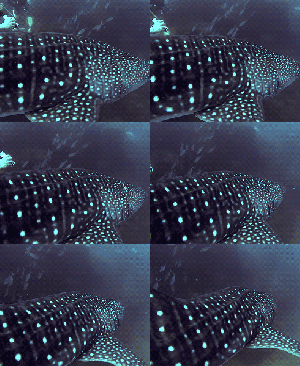
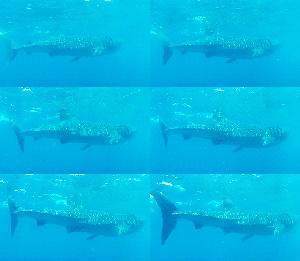
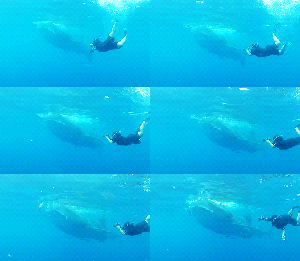
Whale sharks are not only the largest shark – they’re the largest fish in the ocean. These gentle giants feed on some of the tiniest creatures in the ocean: plankton. These sharks may be huge, but never fear, they come in peace. The whale shark is one of only three filter-feeding sharks. Of course, whale sharks are not whales at all; they earned the name “whale” solely for their impressive size. A fun nickname for whale sharks is in Africa, where the sharks are called “papa shillingi.” This nickname in Kenya came from the myth that God tossed shillings upon the backs of these large fish.
cutie-sharks:

giffingsharks:

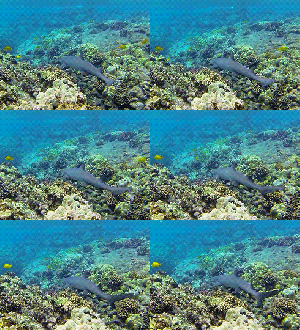
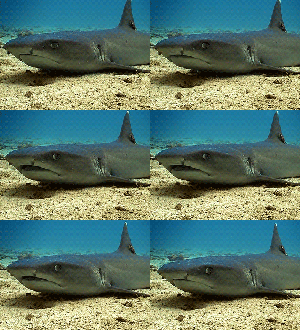
The Whitetip Reef shark is a fairly small shark, not usually getting bigger than five feet long. These little guys are one of the most common sharks found on Indo-Pacific coral reefs. Its scientific name “Triaenodon obesus” means “Fat Trident-toothed” shark. During the day, the Whitetip Reef shark often rests on the seafloor and continuously gulps water to breathe, meaning it does not have to swim to breathe! This shark is more active at night, and on an island called “Cocos” in the Pacific, the Whitetip Reef sharks have learned to hunt by following divers lights.

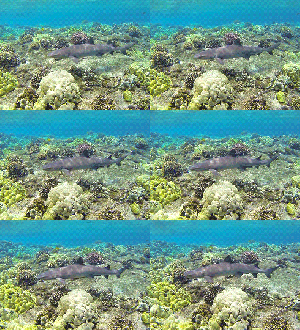
More whitetips! Yay!

giffingsharks:

Bull sharks are one of the very few shark species that can survive in fresh water. Most sharks will absorb too much water and essentially explode, but the Bull shark is different. Its kidneys rapidly process the fresh water and get rid of it; their urine rate increases up to 15x, which means they are constantly flushing out the fresh water from their system.