From tuna fins to turtle flippers, catch up on the latest from our scientists! We continue to pursue new research projects as we aim to inspire a new generation of science-literate citizens—because science is at the core of our conservation mission, and inspires everything we do.
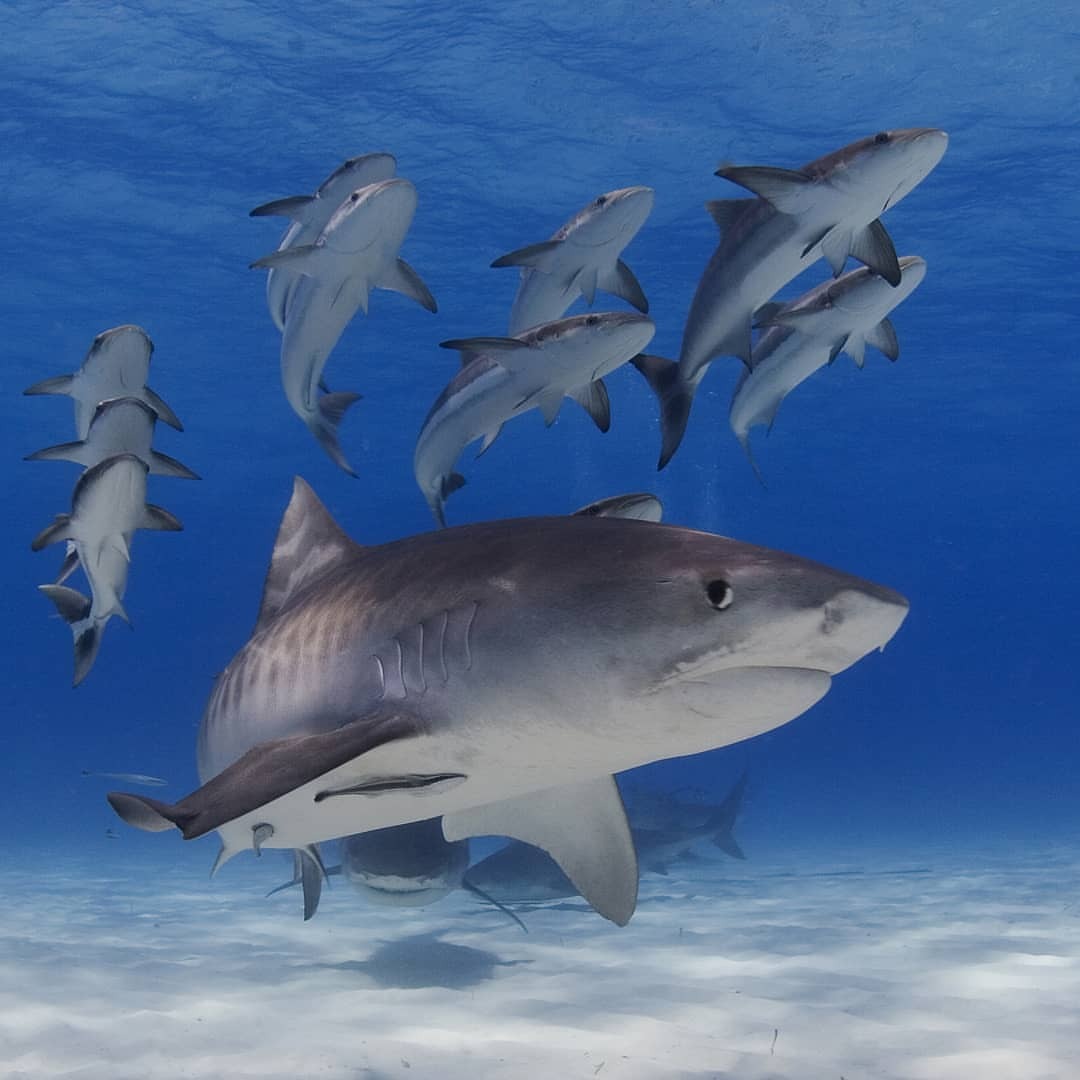
I took this beautiful image of Kate the Tiger Shark with her entourage of Cobia way back when I discovered and named Tiger Beach during the time that Mike Walker was the master of Shear Water, our shark expedition vessel! During that era, I was criticized heavily, labeled insane and controversial, because I pioneered large predatory cageless shark dives worldwide with many of what was considered in those days as the most dangerous sharks! I never defended myself as I knew that sharks don’t seek out humans as a prey source, in fact it’s very hard to even get close! Today many of those hardest critics, have followed in my footsteps and now also do cageless shark interactions! I believe Tiger Beach has become the very best place worldwide, for Large Predatory sharks up close! I’m delighted to have been the path finder, changing the reputation of sharks worldwide!
Sadly I have witnessed immense shark populations disappear which is why I relentlessly do all I can to save them as well as the rest of our beautiful planets wildlife! I’m eternally grateful to all of you for following me and helping me spread my message of conservation! Thank you also for following my non-profit @wildlifevoiceinc @jim_abernethy #saveocean #saveplanetearth #lovenature #stoptheneedlesskillings #Bethechangetheworldneeds (at Jim Abernethy’s Scuba Adventures & Marine Life Art Gallery)
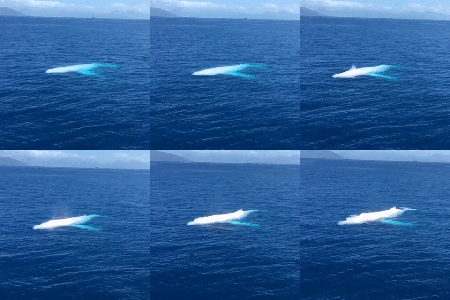
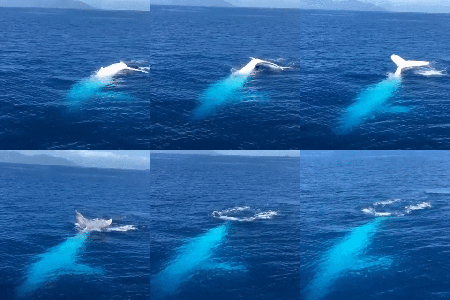
Migaloo is an albino humpback whale, usually sighted along the Australian coast, and occasionally in New Zealand waters. Migaloo was named by the Hervey Bay local aboriginal collective, and it means “white fella”. While several Humpback Whales have been spotted with almost 90% white pigment coverage, Migaloo is the only documented albino.
For the ochre sea star (Pisaster ochraceus), eating is truly an out-of-body experience. When feeding on mussels or snails, the ochre sea star will turn its stomach out through its mouth and into the shells of its prey along with digestive juices that liquefy its meal, then consume it. Ochre sea stars can squeeze their stomachs through shell openings or slits as narrow as 0.1 mm, letting them get to the “meat of the situation.” Photo: D. Gordon E. Robertson
Gorgeous Hawksbill Turtle with its own escort of fish following it to the surface in Palm Beach County, Florida! One of my favorite turtle images that I picked as the cover of one of our conservation books “Sea Turtles Up Close”. Brilliantly written by Jen Nolan, using my images, this book has won 4 awards so far! It is available at my web site in my bio as well as Amazon. If you like my photography you will love all of our books! Education is the key to conservation! As Jacque Cousteau said, “We only protect what we love!” I love Sea Turtles! Hawksbill turtles are listed as endangered worldwide! We must do more to protect our wildlife! Save the turtles!
We’re at the beginning of peak turtle nesting season right now, join me daily at sea to see these beautiful creatures as well as many others in the beautiful clear waters of Palm Beach, Florida! @jim_abernethy #bethechangetheworldneeds #seaturtle #startwithonething #bethevoice #saveturtles #epicimagery #epicencounters #nature #beautiful #conservation #love #loggerheadmarinelifecenter #gumbolimbo #beautiful #epicimages #protectendangeredanimals #passion
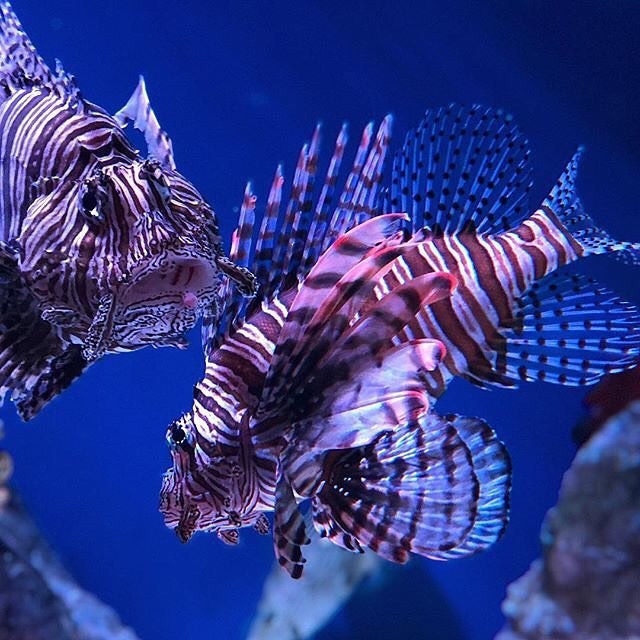
Lionfish may be stunningly beautiful, but they are an invasive menace in the Caribbean. #VisitorPicture by 📷: @floatydreams_ #marchcomesinlikealion #invasivespecies #fish #lionfish #newenglandaquarium
Hello everyone gather round, I’d like to introduce you to another favorite fish of mine. Meet Tetraodon miurus, the potato puffer!
The potato puffer, also called the congo puffer, is a freshwater puffer fish named for, well, looking like a potato with fins. Not to mention that the potato puffer is an ambush predator, unlike most other puffers, which are typically open water hunters. This means that our potato boy here is exceptionally lazy, spending much of it’s time with its awkward, clunk body buried in the substrate with only their eyes and mouth poking out.
They also have extraordinarily smooshy faces that conceal some gnarly fused teeth, resembling a beak! If you wanna see one of these fellas in action, I highly recommend checking out one of my favorite instagram accounts, @jackthepotatopuffer! It has some excellent content and lots of videos of Jack in action, including inhaling eating, and burrowing! Thanks for coming to my TED talk I hope you appreciate the potato boy as much as I do
Sea urchins have modified mouth parts on the underside of their bodies called an Aristotle’s lantern. The lantern is made up of tooth-like plates that scrape up bits of food like algae, as seen here.
We specifically don’t scrub the algae in this habitat for the urchins, and I see them on the walls all the time, presumably getting a tasty meal. But I had never seen it in action before last week! Invertebrates are such cool little aliens!






 wishwhale