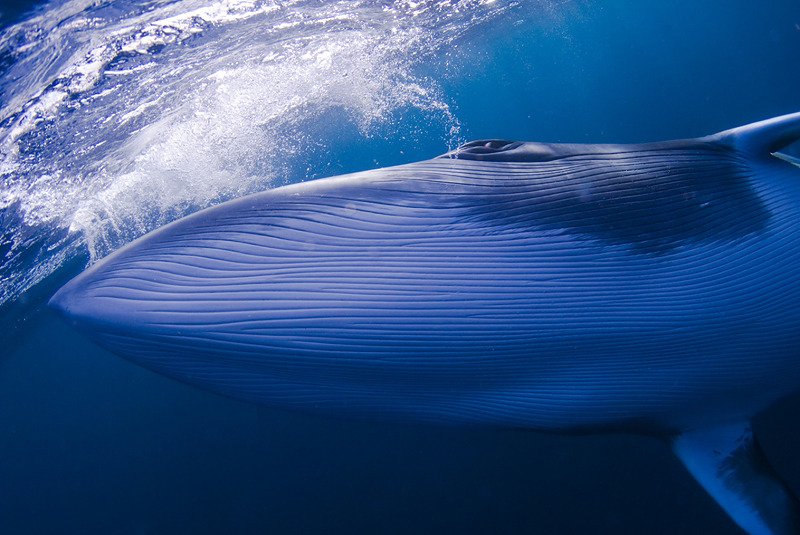
The minke whale (Balaenoptera acutorostrata) is a relatively small baleen whale, only reaching about 33’. It is the smallest of the rorquals and the second smallest of the baleen whales. They can be found worldwide, with populations in the North Pacific and North Atlantic Oceans. Minke whales are one of the most highly commercially hunted species of whales.
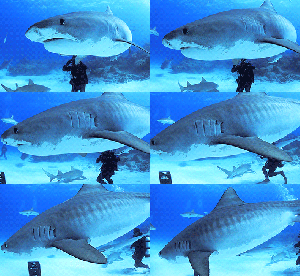
Tiger sharks are known as the “garbage guts” of the sea, and for good reason. As opportunistic feeders, Tiger sharks will eat just about anything. Odd items found in a tiger shark’s stomach include a chicken coop, a bag of money, boat cushions, boots, explosives, hyenas, deer antlers, a bag of potatoes… the list seems endless. As part of a more regular diet, Tiger sharks enjoy turtles, bony fish, crabs, birds and rays. Tiger sharks undergo a remarkably long, 4,660 mile round-trip migration every year. In Hawaiian culture, the Tiger shark is not only considered sacred, but legend has it that its eyeballs have special powers; it’s said that even the mother of the famous King Kamehameha ate Tiger shark eyes during her pregnancy so that her son would have qualities of leadership and bravery.
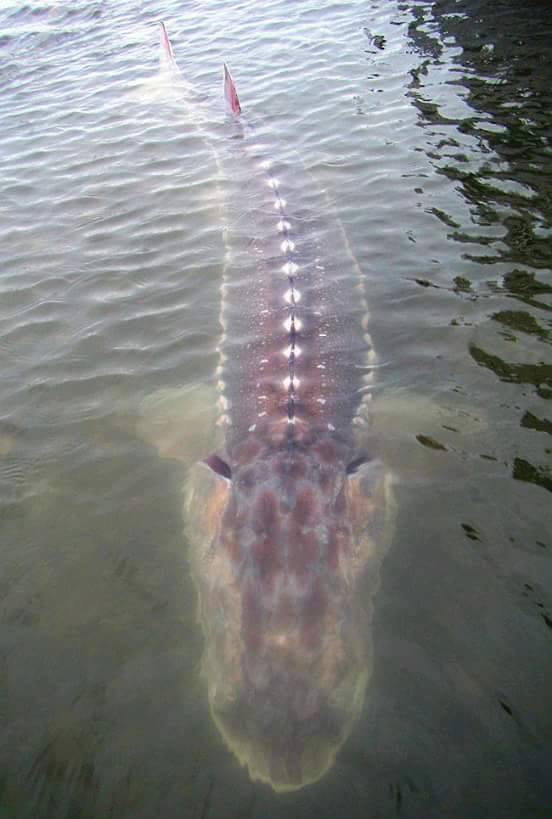
This photograph of a sturgeon has been making the rounds on Facebook lately, freaking people out because they couldn’t figure out what it was.
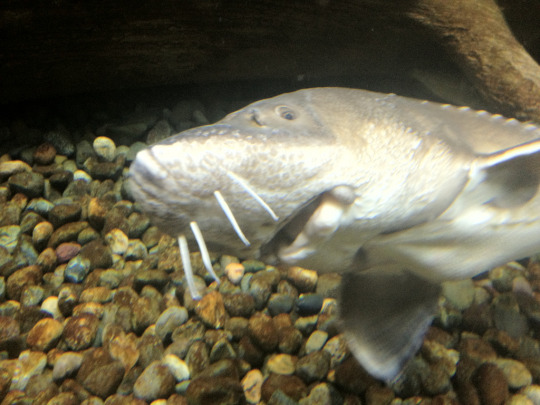
It has come to my attention that many people find this picture scary – but I actually think sturgeon are big squishy babies? I mean
look
at their faces
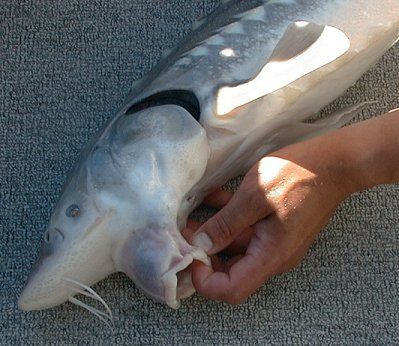
HOW CAN YOU SAY NO TO THAT? And their mouths:
Sturgeon are actually bottom-feeders! They don’t even have teeth.
But I really can see why people are creeped out by them! They look like dinosaurs. And they kind of are, in a way – they’re a relic of a bygone era, dating back over 208 million years ago to the Triassic period.
The sad thing about this, though, is that since sturgeon grow so large, live so long, and have survived on our planet for so many years, they reproduce very, very slowly. Over the years, this has led to the decline of sturgeon populations, with some subspecies – like the kaluga – becoming critically endangered.
Maybe it’s because I saw them on River Monsters (one of my favorite wildlife shows! Seriously, go check it out), but I’ve always had a massive soft spot for sturgeon. The only dangerous thing about them is that they sometimes breach out of the water, and this tendency has occasionally led to the deaths of boaters because they’re so massive.
(Side note: I saw a sturgeon while I was at the aquarium portion of the Biodome, and it was SO CUTE AND IT WAS SO BIG AND I LOVED IT AND I JUST SPENT LIKE 45 MINUTES WATCHING IT SWIM AROUND.)
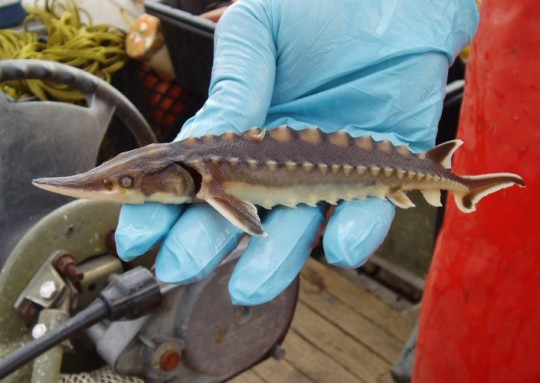
Also, here’s a babby sturgeon because they are very cute and very smol.
There are sturgeon all over in the lake I live on (Lake Michigan, the winter hellhole) and honestly they’re just slow and skittish so
I live on lake Huron and very rarely do we see these guys. When it’s ice fishing season someone will catch one or two on accident. The last one in my area that was caught was 11 feet long.
They’re like ?? Weirdly drawn to the marina my brother works at ? It’s strange to see them leave he depths and yet they surface now and again and they’re pretty neato
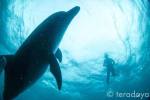
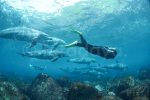
Bottlenose Dolphins near Toshima, Mikurajima and the other Izu Islands offshore of Tokyo swim seemingly peacefully- even willingly- alongside humans and enjoy full protection from the threat of capture or being hunted.
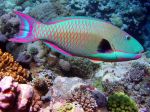
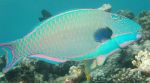
…a species of parrotfish (Scaridae) that is widely distributed throughout the Indo-Pacific, ranging from the Red Sea to the Tuamoto Islands, Izu Island, and the southern Great Barrier Reef. C. bicolor is one of the largest species of parrotfish with adults reaching lengths of around 90 cm (35 in). Like other parrotfish C. bicolor typically inhabits coral reefs and feeds mainly on algae and marine invertebrates.













 wishwhale

