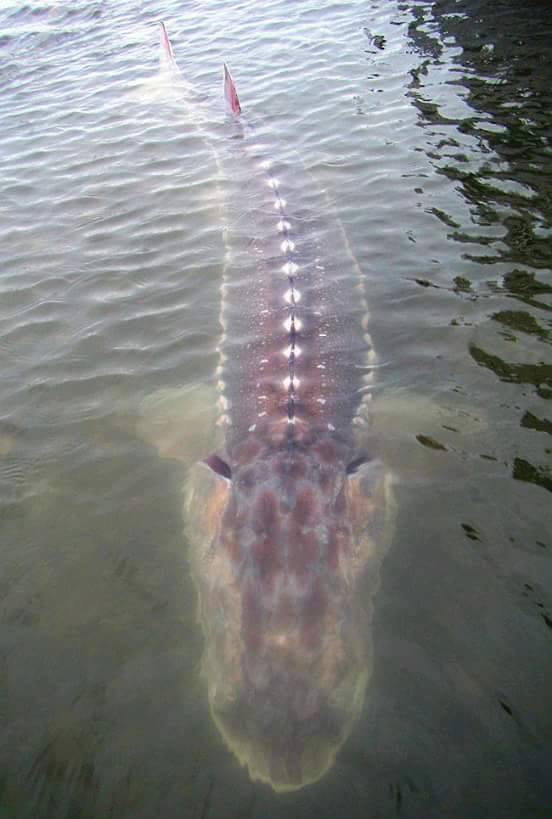
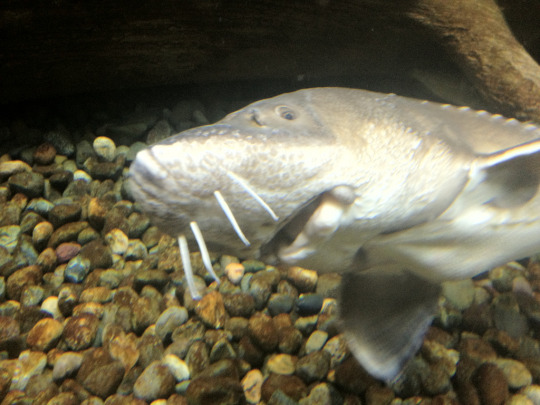
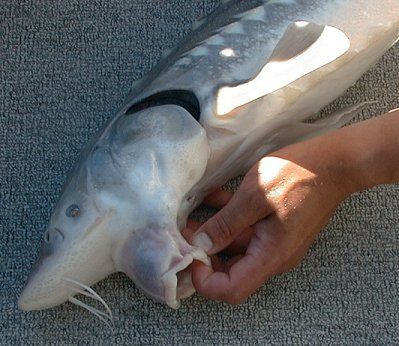
This photograph of a sturgeon has been making the rounds on Facebook lately, freaking people out because they couldn’t figure out what it was.
It has come to my attention that many people find this picture scary – but I actually think sturgeon are big squishy babies? I mean
look
at their faces
HOW CAN YOU SAY NO TO THAT? And their mouths:
Sturgeon are actually bottom-feeders! They don’t even have teeth.
But I really can see why people are creeped out by them! They look like dinosaurs. And they kind of are, in a way – they’re a relic of a bygone era, dating back over 208 million years ago to the Triassic period.
The sad thing about this, though, is that since sturgeon grow so large, live so long, and have survived on our planet for so many years, they reproduce very, very slowly. Over the years, this has led to the decline of sturgeon populations, with some subspecies – like the kaluga – becoming critically endangered.
Maybe it’s because I saw them on River Monsters (one of my favorite wildlife shows! Seriously, go check it out), but I’ve always had a massive soft spot for sturgeon. The only dangerous thing about them is that they sometimes breach out of the water, and this tendency has occasionally led to the deaths of boaters because they’re so massive.
(Side note: I saw a sturgeon while I was at the aquarium portion of the Biodome, and it was SO CUTE AND IT WAS SO BIG AND I LOVED IT AND I JUST SPENT LIKE 45 MINUTES WATCHING IT SWIM AROUND.)
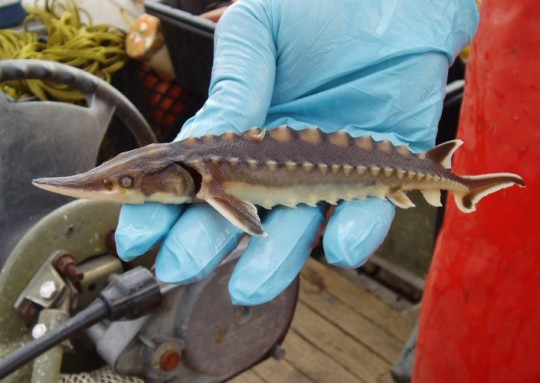
Also, here’s a babby sturgeon because they are very cute and very smol.
There are sturgeon all over in the lake I live on (Lake Michigan, the winter hellhole) and honestly they’re just slow and skittish so
I live on lake Huron and very rarely do we see these guys. When it’s ice fishing season someone will catch one or two on accident. The last one in my area that was caught was 11 feet long.
They’re like ?? Weirdly drawn to the marina my brother works at ? It’s strange to see them leave he depths and yet they surface now and again and they’re pretty neato
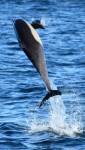
Pacific bottlenose (T. gilli) are an entirely different species, usually the ones captured from Taiji. They are migratory, and tend to be not only very dark in color, but bulkier too. You will mainly see them in Asian, Middle Eastern, Polynesian and some Eastern Europe facilities (since those are Isana Union’s clients). SeaWorld and Sea Life Park still have a few when they did experimental captures in the Pacific.
According to Karen Pryor, animal behaviorist and former dolphin trainer at Sea Life Park, she described in Lads Before the Wind that T. Gilli were much more difficult to train than their Atlantic counterparts.
(a Monkey Mia pod member, via Arkive) Indo-Pacific Bottlenose (T. Aduncus) are also a unique species. They tend to live around Japan, both Koreas, Australia, Phillippeans, Indonesia, and the Eastern side of Africa. Indo-Pacifics have more rounded dorsals, have spotted underbellies, leaner builds and longer beaks (they look quite similar to Atlantic Spotted, minus uniform coat of spots).
This species has been mainly caught in these areas, including the Penghu Island, Taiwan dolphin drives. These drives (before they were effectively abolished) caught a fair number of dolphins. Those dolphins were sent to Ocean Park Hong Kong, and to the United Kingdom during the 1970′s and 1980′s. An untold number were also caught for Japanese parks and off South Africa for the local parks, Ushaka MarineWorld and Bayworld. Currently Ocean Park, Ushaka, and SeaWorld Gold Coast in Australia displays them. South Korea did have a few that were illegally captured for local park, but were later relinquished, rehabbed and successfully released.
(On that note, there is a unique population of Indo-Pacifics off Toshina Island, Japan, that are legally protected. Diver Nana Takanawa follows them pretty closely and has a Vlog of her dives with them.)
(Castaway – via Marine Mammal Conservancy) Believe it or not, there is an Offshore ecotype of Atlantic Bottlenose! Pinky/Patches of Monterey Bay is considered an offshore. As far as I am aware of, only two stranded individuals, Castaway (Dolphin’s Plus, 2006-2010) and Nai’aili (Dolphin Research Center, 1982-1987) were ever kept in captivity.
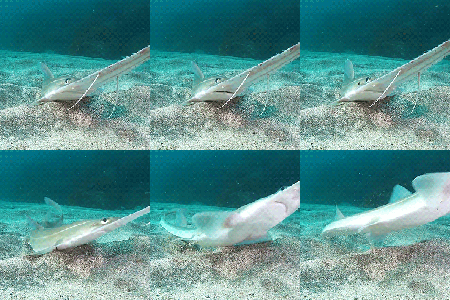
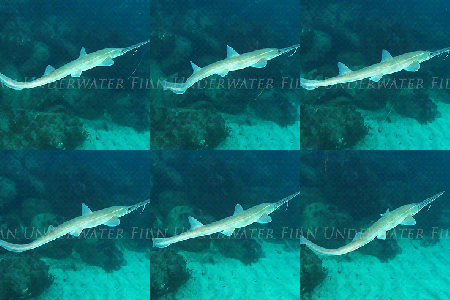
The Japanese sawshark is a sawshark of the family Pristiophoridae, found in the northwest Pacific Ocean around Japan, Korea, and northern China. It has a flat snout, studded with teeth, which resembles a serrated saw. Protruding from the middle of the saw-like snout are two long, sensitive, whisker-like barbels. The sawshark uses these barbels, along with electro-receptors located on the underside of its saw (Ampullae of Lorenzini) to help it find prey buried in the sand as it cruises along the bottom of the ocean. [x]
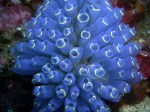
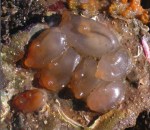
I read an article about deriving bio-fuel from a critter called “sjöpung” and had to go ??? at what that was. Some googling and wiki-ing later, I learn that it’s a group of marine invertebrates called tunicates or sea squirts in English. They come in many more colors than expected! So time for some picshurs in my Tumblr 😉














 wishwhale