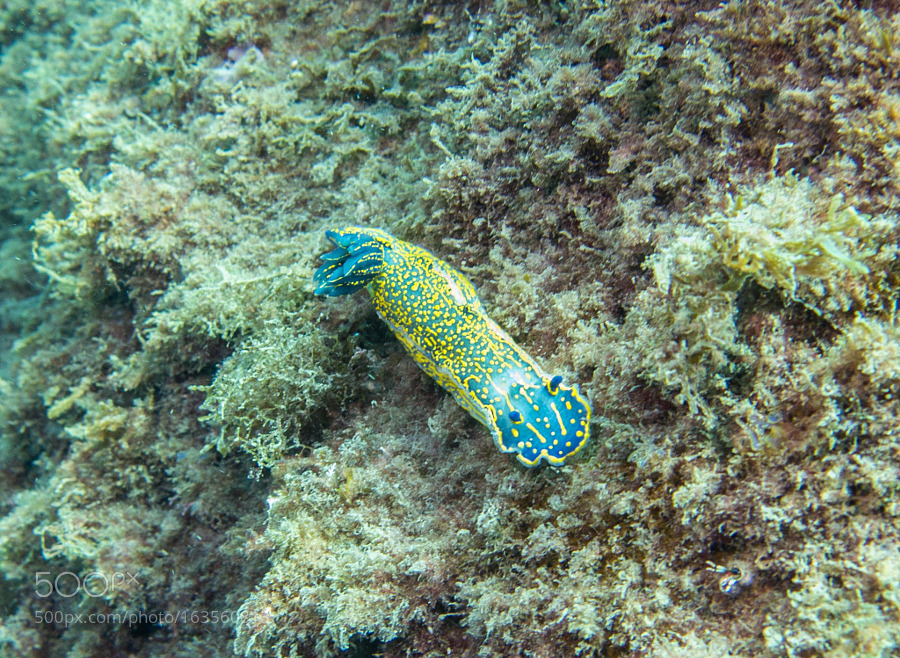
Nudibranchia by jaumeflo Barcelona, 8 mts deep



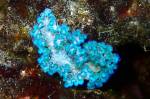
The lettuce sea slug (Elysia crispata) is a large (5cm) and colorful species of sea slug, a marine gastropod mollusk. The lettuce slug resembles a nudibranch, but it is not closely related to that clade of gastropods; it is classified as a sacoglossan, or sap-sucking sea slug.
Sacoglossans live by ingesting the cellular contents of algae, hence the adjective “sap-sucking.”
(x x x x x x x)
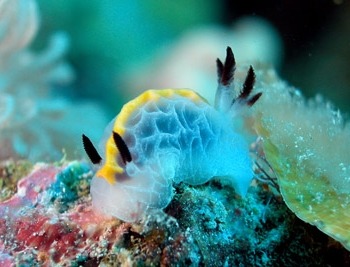
The Halgerda toliara is found near Madagascar and South Africa, and is a dorid nudibranch. It is known for its geometric ridges and yellow median line on its back, although it is often confused for the Halgerda formosa! It grows to be about 4cm long.
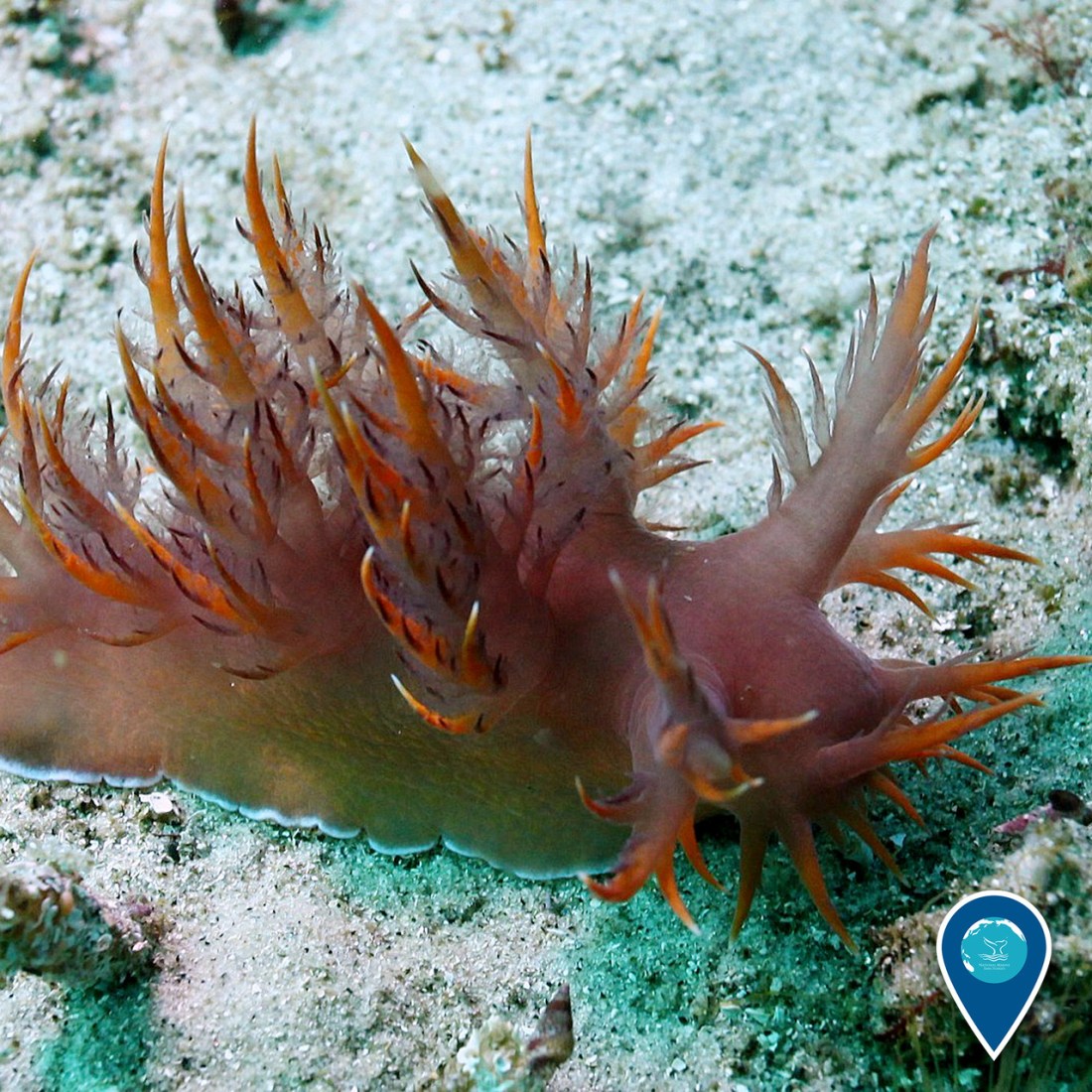
Bad hair day? Not quite!
This is Dendronotus iris, a kind of nudibranch. Those “hairs” you see are actually branching gills, which can be tipped with white, orange, yellow, or purple. This nudibranch prowls the rocky reefs of Monterey Bay National Marine Sanctuary for anemones to chow down on.
(Photo: Chad King/NOAA)
[Image: A close view of a nudibranch, a shell-less mollusk. The nudibranch is dark red, with orange branching gills.]
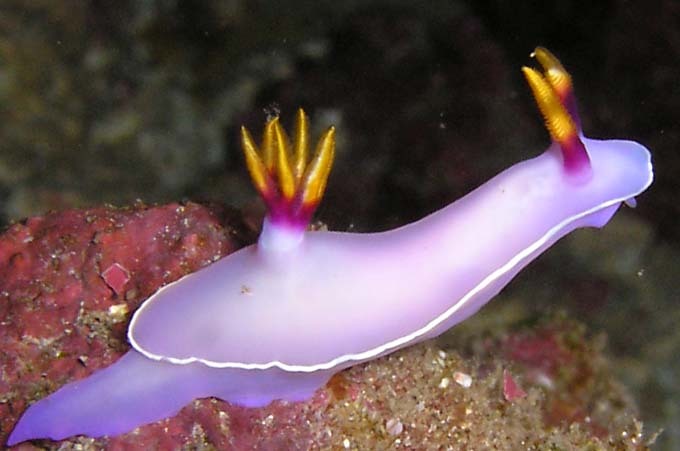
The Hypselodoris bullocki is a well-known dorid nudibranch that comes in many varying colours, from light peach to dark purple. It eats almost exclusively sponges, and sometimes is sold as a pet, although because of its narrow diet it is not recommended to get one. It lives in the Indo-Pacific and grows to be about 4cm long.

Arguably one of the coolest looking nudibranchs is the Phyllodesmium iriomotense, an aeolid nudibranch native to Japan and Indonesia. It feeds on soft corals and gets to be about 2cm long. While it is small, it definitely seems like some alien one would find on an ice-planet!
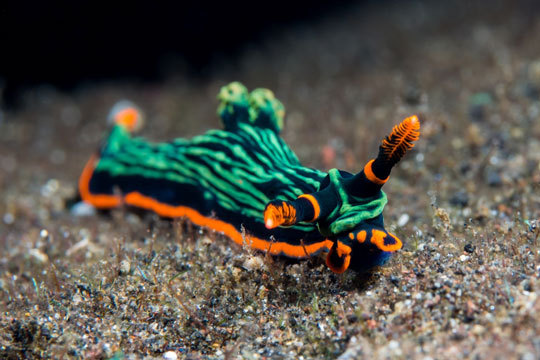
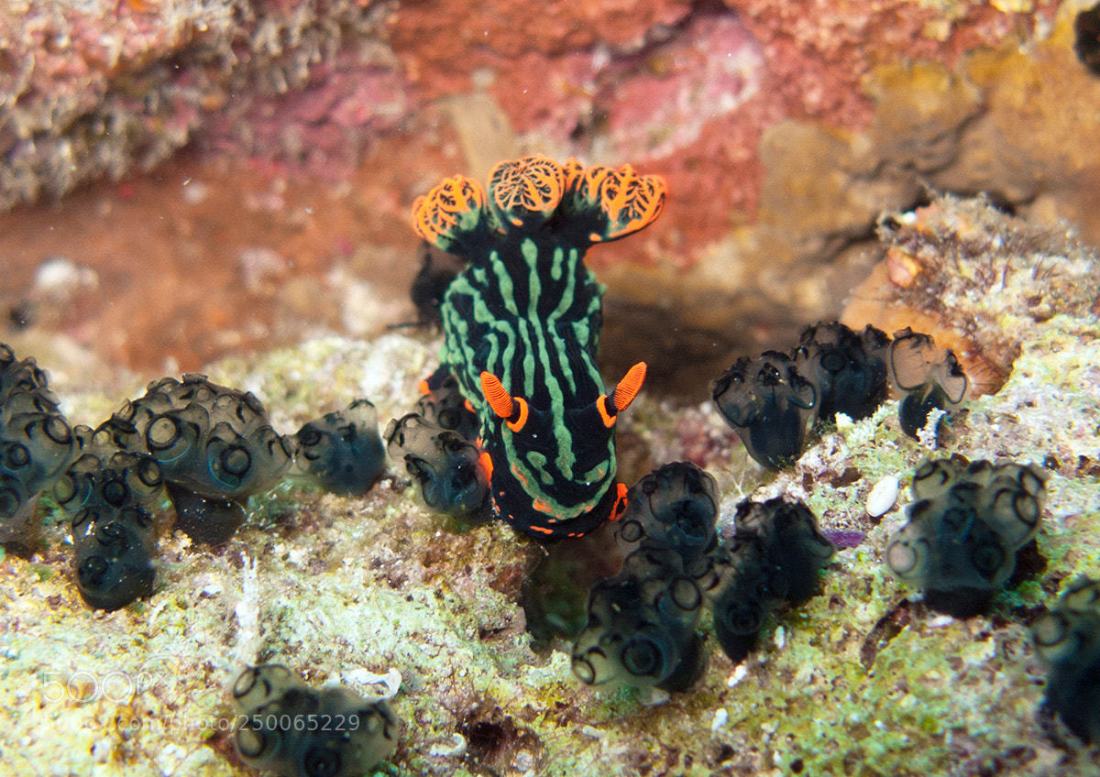
One of my favourite nudibranchs, the dusky nembrotha (also known as variable neon sea slug or, scientifically, Nembrotha Kubaryana) has bright turquoise stripes and a vibrant orange margin. It reaches 12cm long and lives in the tropical West Indo-Pacific. It eats solely ascidians and stores its prey’s toxins to make its own toxic mucus!

 wishwhale
