by
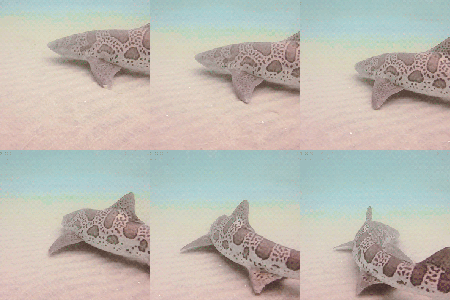
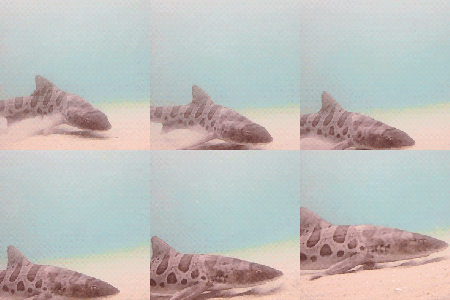
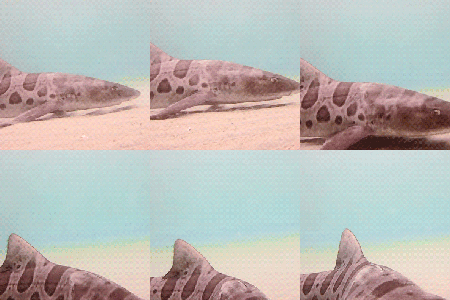

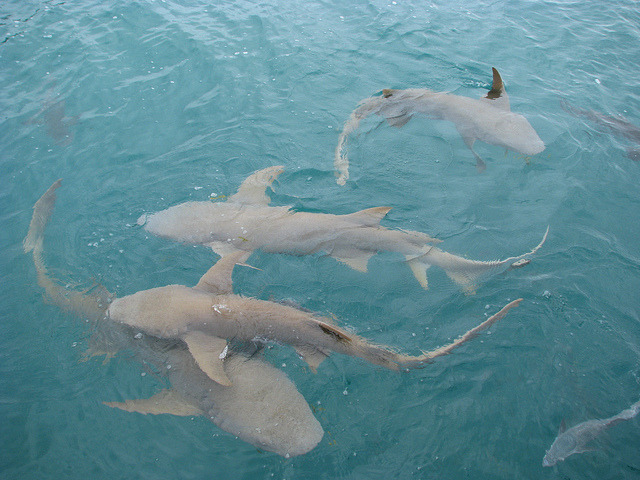
The Leopard shark is a species of houndshark, in the family Triakidae. Known for its distinctive dark spots and saddle type markings, the Leopard shark is known to live up to 30 years, taking more than a decade to reach maturity. Leopard sharks prefer nearshore, shallow waters less than 20 feet deep and tend to hang out near the bottom. They use a variety of habitats, including sandy and muddy bottoms, kelp forests, and rocky reefs. These guys are easy going and have no problem being around divers.

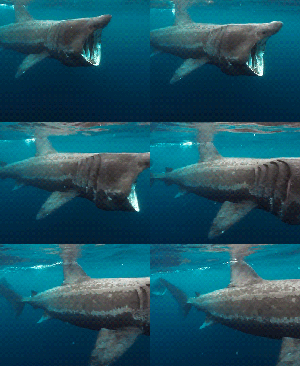


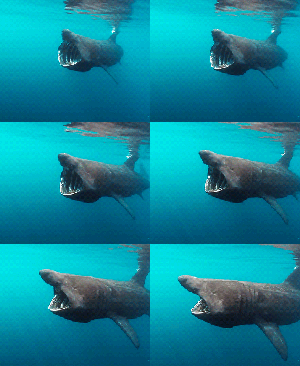
The Basking shark is the second largest shark in the world! This shark lives in cool, temperate waters where there’s a lot of plankton. It swims through the water with its big ol’ mouth wide open; water goes in through the mouth and back out through the gills, but the plankton are strained out by cone-like filters on the gills called “Gill Rakers.” Even though the Basking shark has a massive mouth, it only has a throat about as wide as a grapefruit. So these sharks cause no harm to humans, in fact, they only have teeny tiny teeth! They don’t really care for anything larger than plankton.


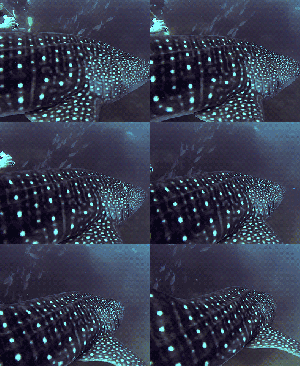


Whale sharks are not only the largest shark – they’re the largest fish in the ocean. These gentle giants feed on some of the tiniest creatures in the ocean: plankton. These sharks may be huge, but never fear, they come in peace. The whale shark is one of only three filter-feeding sharks. Of course, whale sharks are not whales at all; they earned the name “whale” solely for their impressive size. A fun nickname for whale sharks is in Africa, where the sharks are called “papa shillingi.” This nickname in Kenya came from the myth that God tossed shillings upon the backs of these large fish.



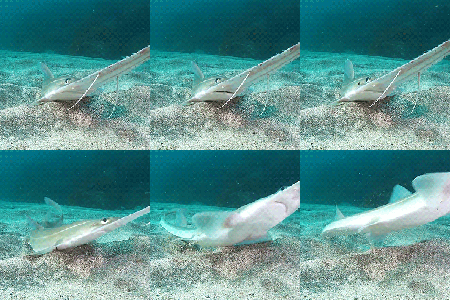
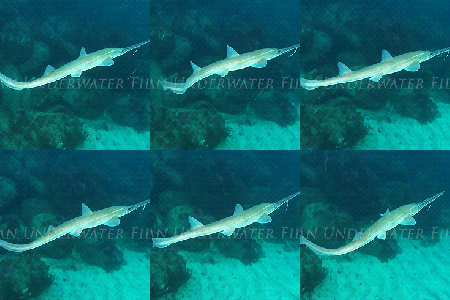
The Japanese sawshark is a sawshark of the family Pristiophoridae, found in the northwest Pacific Ocean around Japan, Korea, and northern China. It has a flat snout, studded with teeth, which resembles a serrated saw. Protruding from the middle of the saw-like snout are two long, sensitive, whisker-like barbels. The sawshark uses these barbels, along with electro-receptors located on the underside of its saw (Ampullae of Lorenzini) to help it find prey buried in the sand as it cruises along the bottom of the ocean. [x]




 wishwhale