astronomy-to-zoology:

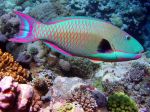
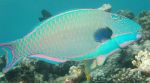
Bicolour Parrotfish (Cetoscarus bicolor)

…a species of parrotfish (Scaridae) that is widely distributed throughout the Indo-Pacific, ranging from the Red Sea to the Tuamoto Islands, Izu Island, and the southern Great Barrier Reef. C. bicolor is one of the largest species of parrotfish with adults reaching lengths of around 90 cm (35 in). Like other parrotfish C. bicolor typically inhabits coral reefs and feeds mainly on algae and marine invertebrates.

Classification

Animalia-Chordata-Actinopterygii-Perciformes-Scaridae-Cetoscarus-C. bicolor

Images: Richard Ling and Leonard Low

giffingsharks:

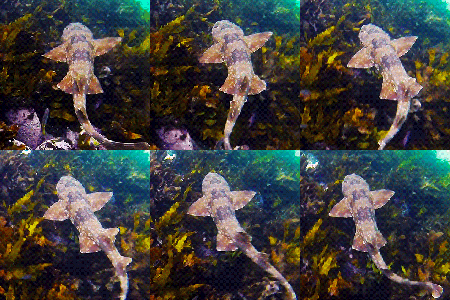
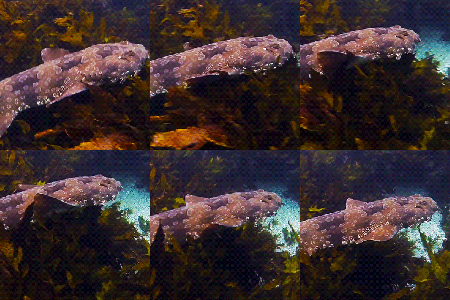
The Wobbegong shark is a dorsoventrally flattened fish. There are twelve species of Wobbegongs and they all have these little stylish fleshy tabs on their chins for camouflage; Wobbegong comes from an aboriginal name meaning “shaggy beard.” Because Wobbegongs are extremely confident in their camouflage, they cause no threat to divers. In fact, divers can swim up to one and it just sits there and doesn’t move, completely convinced that it can’t be seen. Unlike most sharks, which breathe through their mouth, the Wobbegong breathes through a pair of spiracles that are kind of like nostrils that don’t smell, they’re on the top of the head. This is because the mouth is down so low to the sand, if they were breathing through their mouth, they would just get a mouthful of sand. Yuck.
madelinegxvx:

peppermintdegenerate:

bogleech:

lymphonodge:

kikuzu:

(via ✿_マリコさんのツイート: “#秘密にしておきたかった生き物 ホヤの子供。カールおじさんホヤって愛唱で呼ばれてるけどかわいいと思う https://t.co/RxCXlTwIph”)

:O :O :O :O :O

These are tunicates and the rings really are their mouths but I don’t know what the dots are for!

:O       :O         :O :O

     :O    :O :O

  :O                 :O          :O

dots used to see